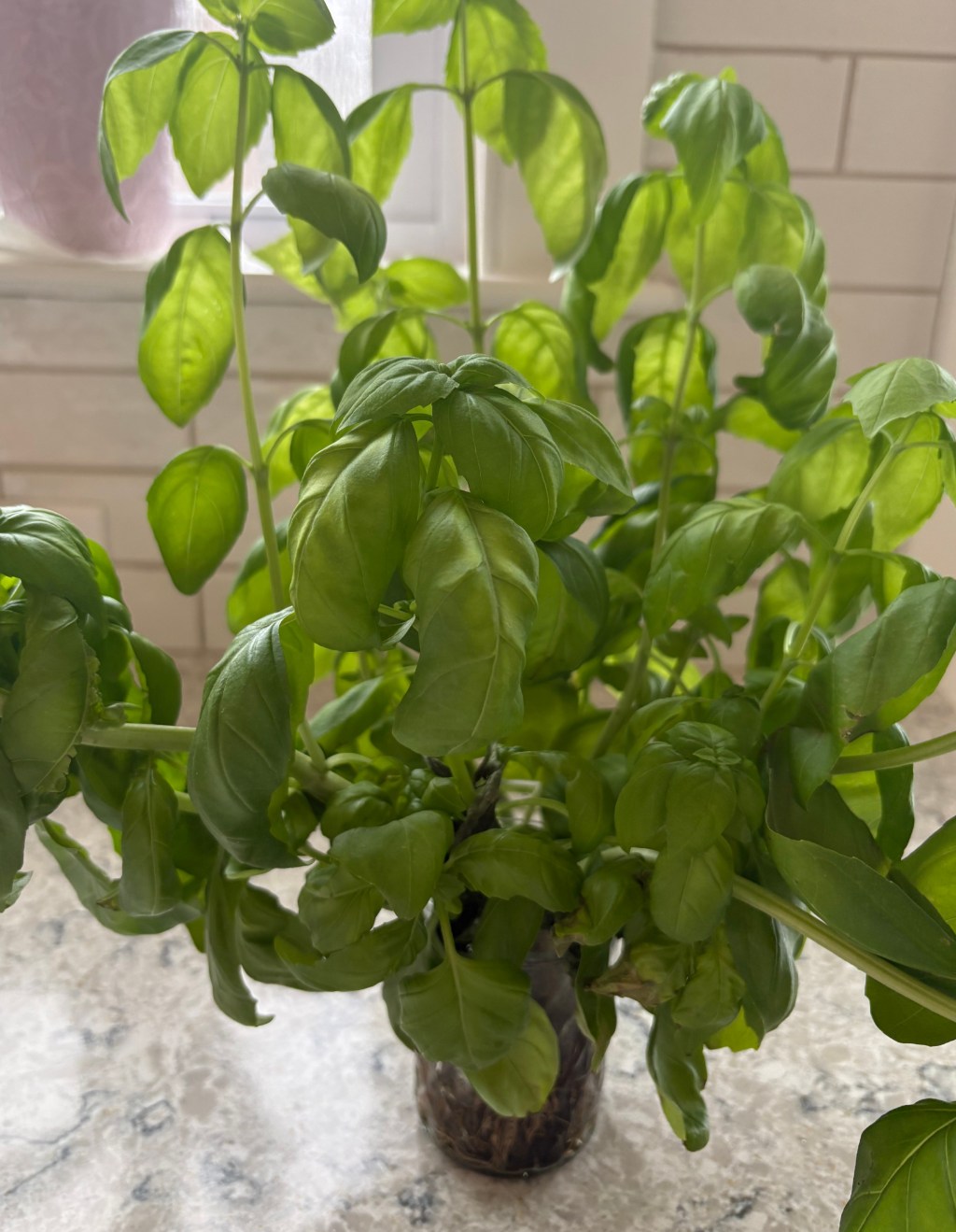
A simple, bright sauce made the traditional way — with a few modern shortcuts.
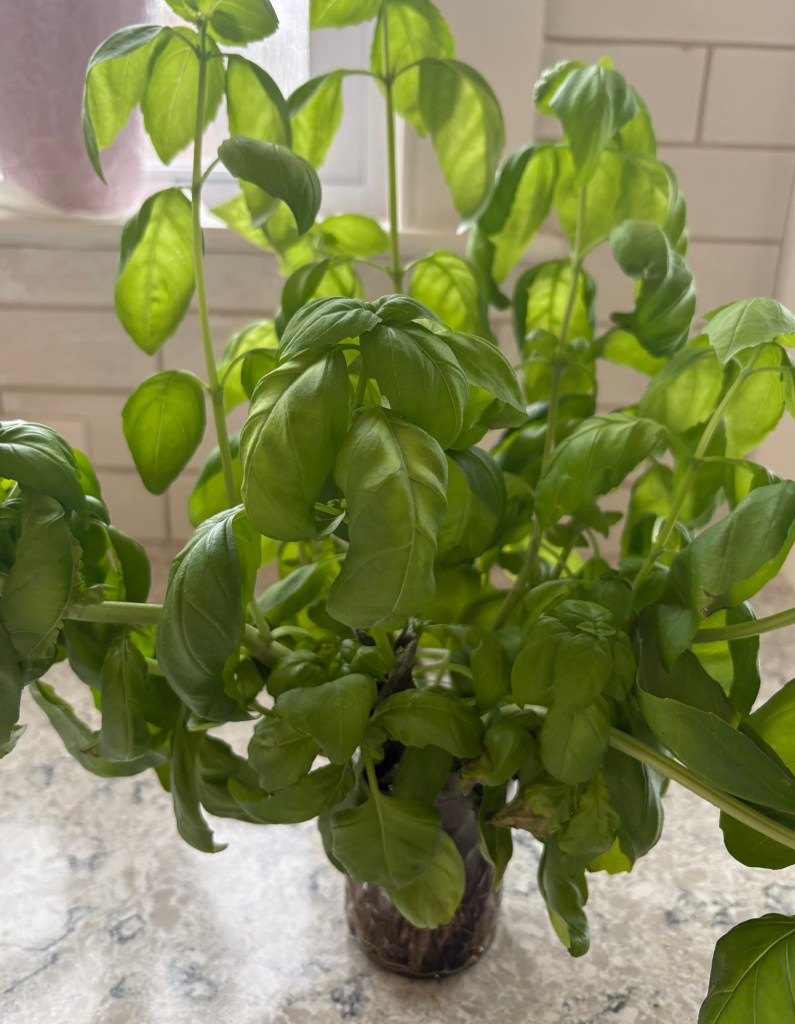
*An easy way to have fresh basil for pesto all year round is to buy a small plant in the produce section, set it in water, and let it grow a bit so you can use the leaves for your pesto. Never let the plant or any basil go to seed. It will produce a bitter flavor.
There are certain sauces that remind me how little it takes to make food truly memorable. Pesto is one of them.
Fresh basil, good olive oil, toasted pine nuts, garlic, and Parmesan-Reggiano come together to create a sauce that feels both vibrant and comforting. Traditionally, pesto is made using a mortar and pestle, slowly crushing the ingredients together until they form a fragrant paste. While that method has its charm (and on occasion I do it this way), a small kitchen chopper or food processor makes it easy to prepare at home in just a few minutes.
At Saporito, I also like to add a small squeeze of fresh lemon juice. It’s not found in every traditional pesto, but it brightens the flavor and helps the sauce lift a bowl of fresh pasta beautifully.
Ingredients:
- 2-3 cups fresh basil leaves, loosely packed
- 1 clove of garlic
- ¼ cup pine nuts, lightly toasted
- ½ cup grated Parmigiano Reggiano
- ½ cup good quality olive oil
- ½ teaspoon salt (or to taste)
- ¼ teaspoon freshly ground black pepper
- Optional: 1 tablespoon fresh lemon juice
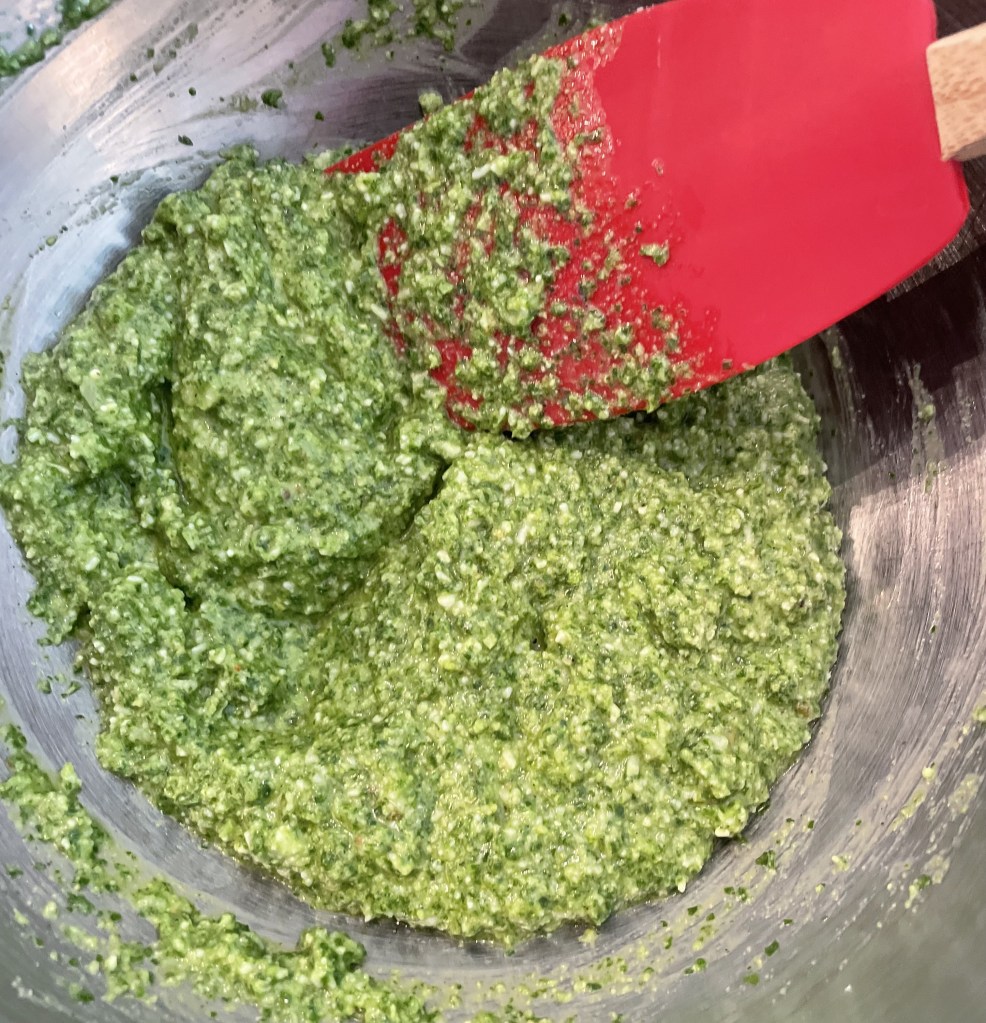
Directions: As a quick reminder, the pesto will come out as a paste, but after cooking pasta, use the pasta water to thin out the pesto. It is not meant to be heated over the stove, as it will turn black.
- Toast the pine nuts: In a small dry skillet over medium heat, toast the pine nuts for 2–3 minutes until lightly golden and fragrant. Keep an eye on them — they can burn quickly once their oils are released. Let them cool before using.
- Combine the Base Ingredients: In a small food processor or chopper, add the garlic and toasted pine nuts. Drizzle a bit of olive oil and lemon juice (I always add it at this point. I don’t think there’s any difference in adding it later if you plan to use it). Chop until they are combined and thick. Add the fresh basil and the remainder of the olive oil slowly and continue to chop. The pesto should be smooth and finely textured. I usually let the food processor go for about 30 seconds.
- Mix in Parmesan-Reggiano: In a mixing bowl, pour out the contents of the processor add salt and pepper and the grated Parmesan-Reggiano. Using a spatula, mix ingredients together thoroughly to form a thick paste of pesto.
A Little Tip:
Pesto will keep in the refrigerator for several days. To keep the bright green color, store it in a small jar and pour a thin layer of olive oil over the top before sealing.
How to Use It
Pesto is wonderfully versatile.
Try it:
- Tossed with fresh pasta
- Spread on warm bread or crostini
- Stirred into soups for extra flavor
- Drizzled over roasted vegetables
- Mixed with grilled chicken or shrimp
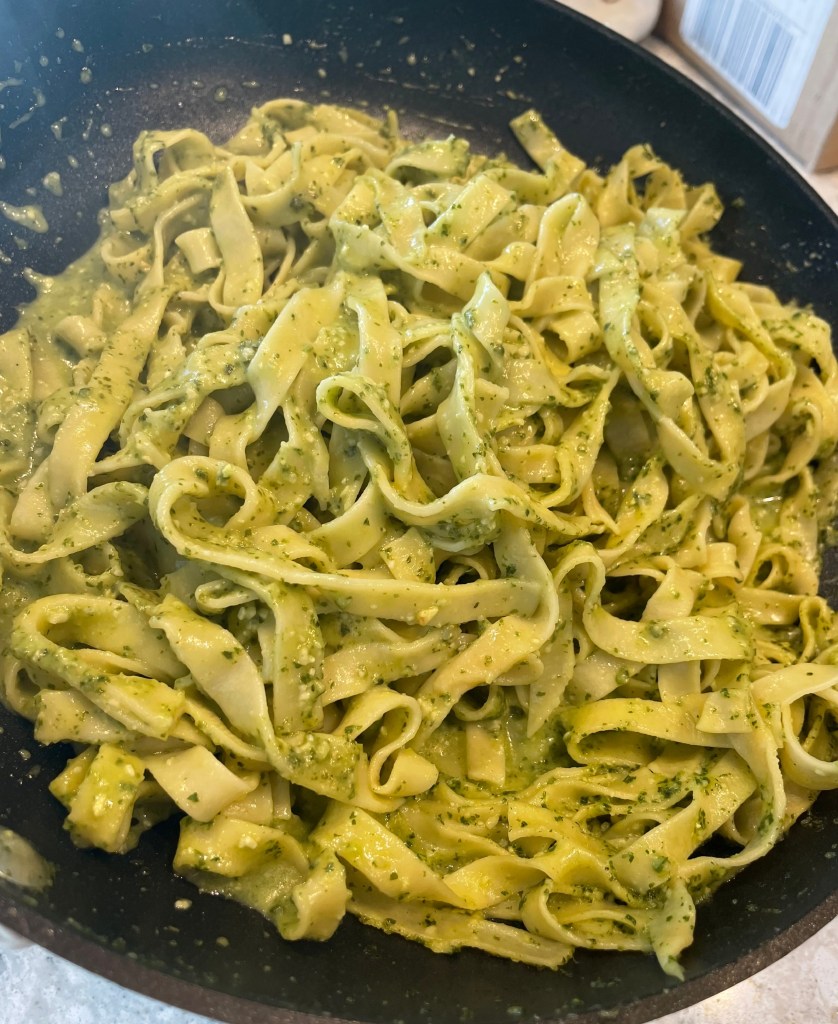
- If using pesto with pasta, reserve a small amount of pasta cooking water and stir it in when tossing the pasta and sauce together. It helps the pesto coat the pasta beautifully.
- If drizzling on vegetables or dipping bread, add a little olive oil to the paste to help loosen it.
Simple ingredients. Honest flavor. And one of the easiest ways to bring fresh herbs from the garden straight to the table.
At Saporito, this is the kind of recipe that reminds us that simplicity is delicious. Be on the lookout for other simple pesto recipes from Saporito.
- Arugula-Walnut Pesto
- Kale and Almond Pesto
- Mushroom Pesto
- Roasted Red Pepper Pesto
Get ready to make room at your table!
 fresh pasta
Leave a comment